Full-Grain vs Genuine Leather: What's the Difference?
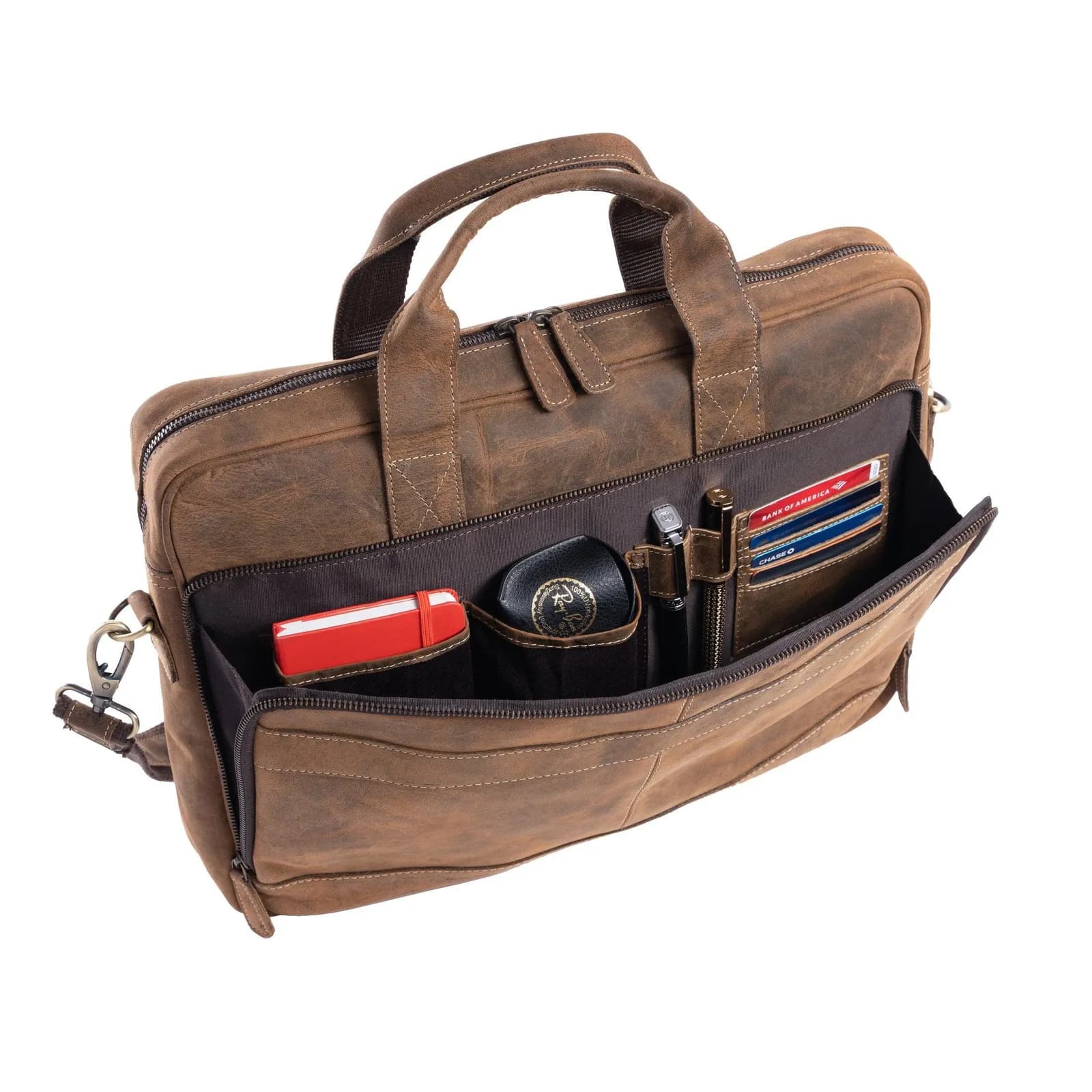
Understanding leather grades and why full-grain is the only choice for goods that last a lifetime.
Walk through any department store and you’ll see the words "genuine leather" stamped on wallets, bags, and belts like a badge of honour. Here’s the uncomfortable truth: in the leather industry, "genuine leather" is one of the lowest grades a product can carry while still legally being called leather. If you’ve ever owned a belt that cracked within a year or a bag whose surface peeled like sunburn, you’ve met genuine leather.
Understanding leather grades takes about five minutes, and it will change how you buy leather for the rest of your life. Let’s break it down.
A hide has layers — grades are about which layer you get
Every cattle hide has a tight, dense top surface (the grain) where the fibres are packed hardest, and looser, weaker layers underneath. When a tannery splits a hide horizontally, the cut you receive determines almost everything about how the finished product looks, feels, and ages.
The four terms you’ll encounter, from best to worst: full-grain, top-grain, genuine (split) leather, and bonded leather.
Full-grain: the entire grain surface, untouched
Full-grain leather keeps the complete outer surface of the hide. Nothing is sanded or buffed away — the natural pores, the tight fibre structure, even the faint scars and range marks that prove an animal actually lived. This layer is the strongest part of the hide by a wide margin, which is why saddles, work boots, and heirloom bags have always been cut from it.
Because the surface is intact, full-grain leather does something no other grade can: it develops a patina. Oils from your hands, sunlight, and daily use gradually deepen and burnish the colour, so a five-year-old full-grain bag looks better than the day it was bought, not worse. It is more expensive — tanneries can’t hide flaws, so only clean hides qualify — but it’s the difference between replacing a bag every two years and handing one down.
Top-grain: sanded smooth, weaker over time
Top-grain leather starts as the same upper layer, but the surface is sanded to remove imperfections, then coated with pigment and sealant for a uniform look. That sanding removes the densest fibres, and the plastic-like finish coat blocks the leather from absorbing conditioning oils.
The result looks flawless in the showroom and is common in fashion handbags. But instead of building a patina, the coating slowly wears through, and the leather beneath dries out. Top-grain is not bad leather — it’s simply engineered for the first impression rather than the tenth year.
"Genuine leather" is a grade, not a compliment
When the strong upper layers have been split away, what remains is the loose, fibrous underside of the hide. Manufacturers emboss a fake grain pattern into this split, spray on a finish, and can legally stamp it "genuine leather."
Structurally, it has a fraction of the tensile strength of full-grain. This is the material behind almost every leather product that cracks at stress points, peels at the edges, or sags out of shape within a couple of years. The phrase is marketing sleight-of-hand: technically true, practically misleading.
Bonded leather: the particle board of the leather world
Bonded leather is made from leather scraps and dust, shredded and glued to a fibre backing with polyurethane. It may contain as little as 10–20% actual leather by weight. It photographs convincingly and fails predictably — usually by peeling in sheets. If a "leather" sofa or portfolio seems impossibly cheap, this is why.
How to tell what you’re actually buying
Look at the surface up close: real full-grain shows slightly irregular pores and natural variation, while embossed splits repeat a perfect, uniform pattern. Check the cut edges — full-grain shows dense, tight fibres, while splits look fuzzy and open. Smell it: vegetable-tanned full-grain has a rich, earthy smell, while heavily coated leather smells like chemicals or nothing at all.
Above all, read the label the way the industry does. "Full-grain" is a precise claim a maker stands behind. "Genuine leather" or just "100% leather" tells you which questions the maker hopes you won’t ask.
Why we only work with full-grain
Every Adam Leather piece — from our duffle and laptop bags to the smallest coin pouch — is cut from full-grain cowhide or buffalo leather, stitched to be repaired rather than replaced. It costs more to make and takes longer to source clean hides, but it’s the only material that honours a simple promise: built to last a lifetime, and to look better the whole way through.
If you want to see what an honest grain surface looks like, browse the collection photos up close — the texture you see is the hide’s own, not an embossing plate’s. And once your piece arrives, our care guide covers the small habits that keep full-grain ageing gracefully for decades.